
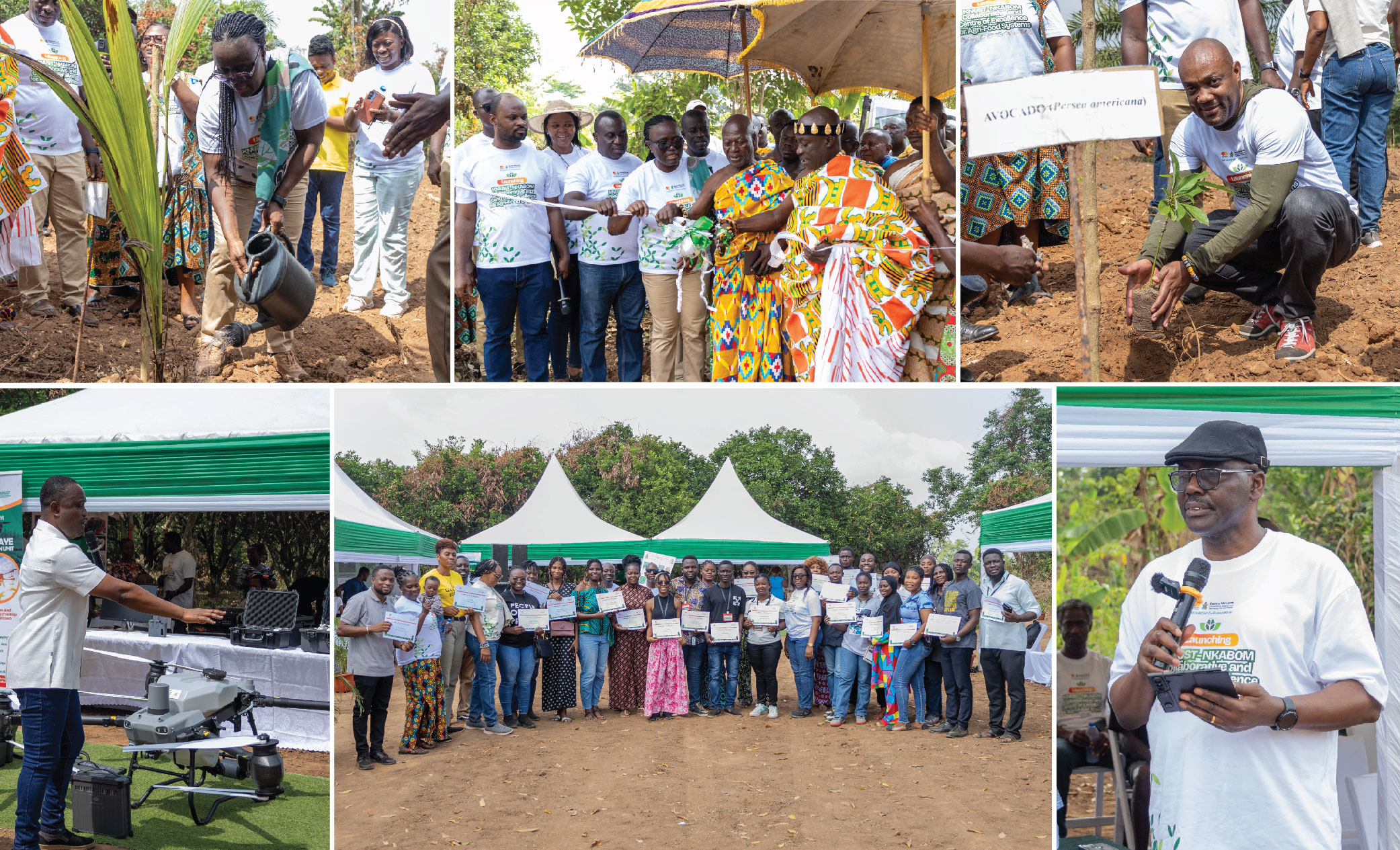
The Kwame Nkrumah University of Science and Technology (KNUST), Kumasi in partnership with the Mastercard Foundation through the Nkabom Project, has launched the KNUST Nkabom Collaborative and inaugurated the Agri-Food Centre of Excellence at the University’s Anwomaso Farms in Kumasi.
The event, held on the Farmers’ Day holiday, marks a significant step towards strengthening Ghana’s agri-food ecosystem through research, innovation and youth empowerment.
Speaking at the launch, Professor William Otoo Ellis, Principal Investigator of the KNUST Nkabom Collaborative, described the initiative as a decisive response to Ghana’s shifting demographic trends and food systems challenges.
“Today is not simply the unveiling of two initiatives. It is a reaffirmation of our shared commitment to strengthen Ghana's agri-food and nutrition ecosystem by making it more resilient, innovative, and inclusive for generations to come,” he said.
He noted that Ghana’s current population of more than 34 million is projected to reach 61 million by 2051, a shift that will place mounting pressure on food, nutrition and employment systems. Despite agriculture’s vast potential, he said many opportunities remain untapped.
“The agri-food sector, which contributes 54% of our GDP, offers immense but underutilised opportunities for innovation and sustainable job creation,” he stated.
“Through this collaborative, we will nurture a new generation of skilled, confident, and empowered agri-food youth professionals who will lead in climate-smart agriculture, food safety, nutrition, agri-tech, and entrepreneurship,” he added.
KNUST Vice-Chancellor, Professor (Mrs) Rita Akosua Dickson, expressed appreciation to project partners and underscored the symbolic timing of the launch.
“To have set aside today, a public holiday dedicated to celebrating our hardworking farmers, to launch this Project is a testimony to our commitment and unwavering support,” she remarked.
She commended the Nkabom Project team for its pace and impact.
“For some time now, I have followed with keen interest the impactful activities of the Nkabom Project, and one thing is certain, you are not allowing any grass to grow under your feet,” she said.
Professor Dickson described the Centre of Excellence as a hub for hands-on training, applied research, technology transfer and strengthened engagement with industry and communities.
“These initiatives embody the true spirit of Nkabom, which is unity in purpose and action. They will bring universities, government agencies, industry leaders, communities, development partners, into a shared mission,” she said.
Pierre Brunache Jr, Director of the Nkabom Collaborative at McGill University, highlighted the economic potential within Ghana’s agri-food sector.
He noted that Ghana’s agriculture value chain is currently a US$15-billion industry, projected to reach US$20 billion in the coming years. With households spending about 43% of their income on food, he said establishing a Centre of Excellence at KNUST is a strategic investment in developing young agri-food entrepreneurs.
Mr Brunache stressed the critical role of youth engagement, pointing to recent scenes of large numbers of young people seeking military recruitment as evidence of their desire for productive opportunities.
“The youth are not lazy. They want to be productive members of society. There is no better place for them to contribute than the agri-food value chain because it covers everything,” he said.


